
Standard or Custom Packaging? Start with the SKU
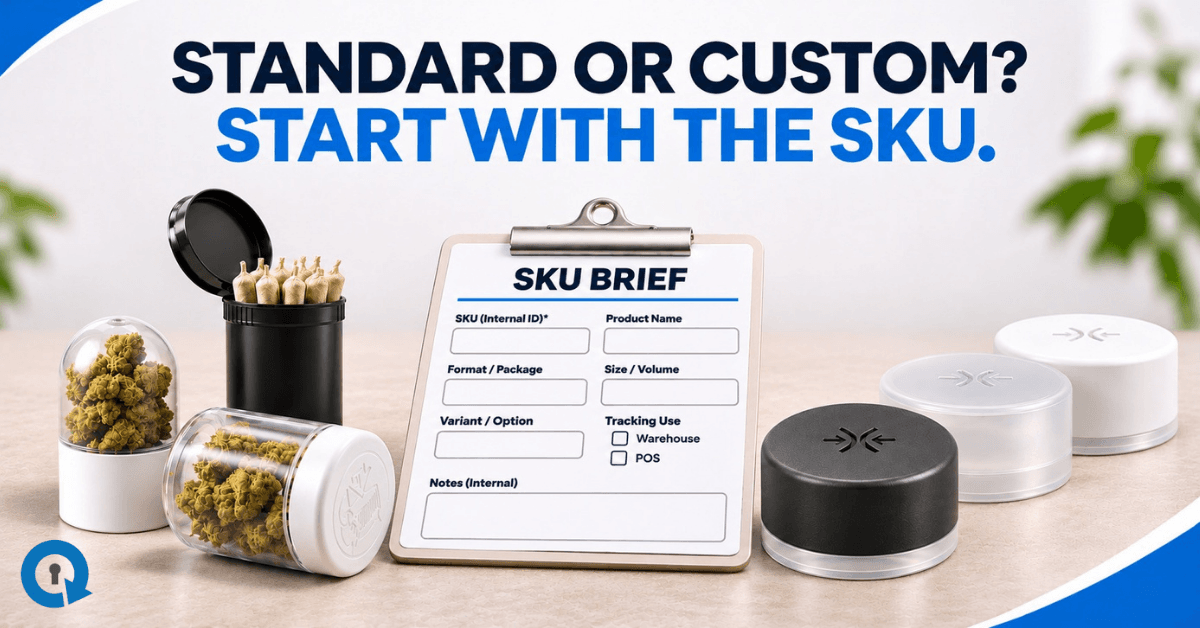
Custom packaging is often discussed as the desirable option. That is not a useful rule for every cannabis SKU.
A standard jar, bottle, tube or pouch may already meet the product requirement. It may fit the line, support the necessary labelling and be appropriate for the forecast volume. Starting with custom tooling because the design is more distinctive can introduce work the program does not need.
The better first step is to define the SKU and the job the package must perform.
The standard format test
Before asking for a new structure, establish the current requirements: product type, expected capacity, fill or packing method, closure specifications, applicable regulatory documentation, handling requirements, artwork, volume and timing.
Then test established formats against those criteria. MedLock supplies a range of jars, bottles, PET tubes, pop-top formats, pouches and related packaging options. Where one of those formats fits the application, a standard program can be the disciplined commercial choice.
A standard answer is not a compromise. It is a decision based on requirements.
When a different format earns consideration
The decision changes when the requirement is not adequately met by the standard options. That might be a different structural form, an opening or closing interaction, a product handling need or a format that needs to accommodate a new category.
Pop-Puck provides a useful example for assessment. Its compact puck-shaped structure, multiple intended applications and integrated freshness ring create a specific set of features to evaluate. It should be selected because those characteristics suit the intended SKU, not because novelty alone is a purchasing argument.
Write the brief before discussing tooling
When standard formats do not solve the problem, a development brief reduces uncertainty. It should define the intended product, pack quantity, material needs, required closure behaviour, filling equipment, applicable test documentation, artwork, projected volumes and target timing.
The brief should also distinguish non-negotiable requirements from preferences. A change in pack-out may affect the result more than a change in silhouette. A particular closure need may determine the development route. A volume forecast affects whether dedicated tooling can be justified.
These conversations are more productive before a design is treated as final.
Capability is part of the supplier comparison
MedLock’s approach combines standard packaging with design work in Canada, international manufacturing using its own tooling and finished inventory held in Canada. This is the operational basis of its From Concept to Shelf platform.
For a Canadian LP, the relevance is flexibility across packaging needs. A current SKU may belong in an established format. A future SKU may need development work. The supplier relationship should be evaluated against both scenarios.
That is the November chapter of Choose Canadian. Compare the Whole Quote: compare the capability to support the requirement, not only the item being quoted today.
Bring the requirement
Teams planning a 2027 SKU can start by sharing the product category, approximate volume, what the current format does not solve and any known workflow or labelling constraints. MedLock can use that information to review standard options and determine whether a development discussion is appropriate.
blog

What a Pop-Puck Sample Should Prove
Learn what a MedLock Pop-Puck sample should prove, from SKU compatibility and child-resistant closures to filling processes, customization and packaging decisions.
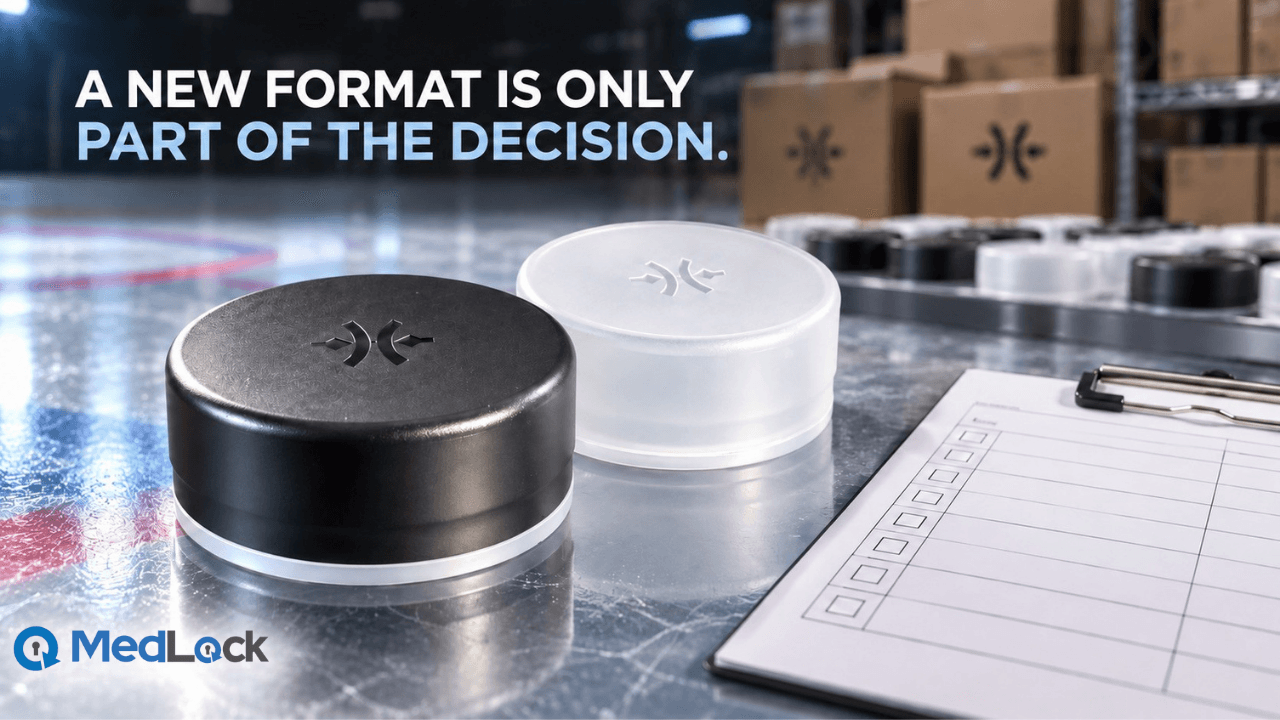
A New Cannabis Package Is More Than a New Shape: What LPs Should Evaluate Before They Add It
Explore five key factors LPs should consider when evaluating new cannabis packaging, from Pop-Puck's product fit and freshness ring to supply and branding.
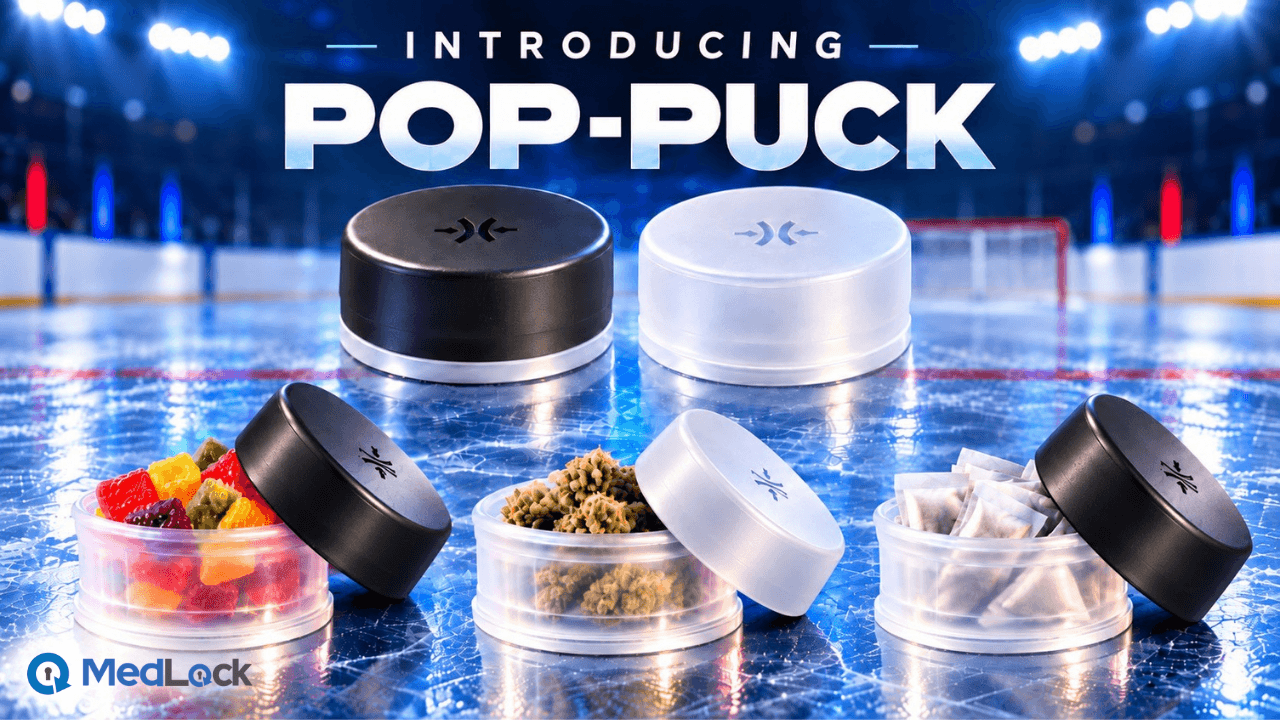
Introducing Pop-Puck: Why a New Cannabis Packaging Format Has to Do More Than Look Different
Discover MedLock’s Pop-Puck, a child-resistant cannabis packaging format for edibles, flower and pouches, featuring a built-in freshness ring and customization options.